Chapter 10 — Nobody Had to Lose Their Seat
Margaret eventually walked onto the stage to give her retirement speech.
The ballroom applauded.
She looked toward the people who had worked beside her for decades.
Doctors.
Nurses.
Parents of former patients.
Friends.
Family.
Then she looked toward Table 8.
Robert.
Helen.
Olivia.
Daniel.
And David Hale.
Margaret looked down at her prepared speech.
Then closed the folder.
“I had planned to talk tonight about forty years in nursing.”
Guests smiled.
“And I will.”
Then:
“But apparently my family decided the seating chart needed to become a crisis first.”
Laughter moved through the ballroom.
Daniel raised his glass.
Olivia covered her face.
Margaret smiled.
She did not explain David’s private history to hundreds of people.
It wasn’t theirs to consume.
Instead she spoke about something her career had taught her.
“In a hospital, people often arrive carrying incomplete information.”
“One person remembers one thing.”
“Someone else remembers another.”
“A chart may be outdated.”
“A message may never have reached the person it was meant for.”
Then:
“The dangerous moment is when incomplete information becomes certainty.”
Robert lowered his eyes.
Margaret continued.
“Tonight reminded me that families are not very different.”
After the speech, David congratulated her.
“Forty years.”
Margaret smiled.
“I know. I’m exhausted just hearing it.”
“You always said you’d never retire.”
She stared at him.
“You remember that?”
“You said retirement was for people with hobbies.”
Margaret laughed.
“Still don’t have one.”
“You could try relaxing.”
“Sounds terrible.”
There it was.
A piece of conversation interrupted for twenty-seven years.
Not romance.
Not destiny.
Recognition.
Over the following months, Margaret and David remained in occasional contact.
They exchanged photographs of their late spouses.
Talked about people they once knew.
Then sometimes talked about nothing important at all.
Margaret eventually told Olivia:
“I’m glad I know the truth.”
Olivia looked hopeful.
“So inviting him was good?”
Margaret immediately shook her head.
“Don’t get carried away.”
Olivia laughed nervously.
“Right.”
“You lied to David about me knowing.”
“Yes.”
“You changed Daniel’s seat without telling him.”
“Yes.”
“You planned an emotional ambush at my own retirement reception.”
Olivia sighed.
“When you list it like that, it sounds bad.”
“It was bad.”
Then Margaret softened.
“Your intention was to fix something.”
“But?”
“But people aren’t broken appliances.”
Olivia nodded.
She apologized to Daniel too.
Properly.
Not:
“Sorry you got confused.”
Not:
“Sorry, but there wasn’t enough room.”
She said:
“I deliberately removed you from the table because your seat was convenient.”
Then:
“I should have asked.”
Daniel smiled.
“Correct.”
“Do you forgive me?”
“Depends.”
Olivia frowned.
“On what?”
“Am I invited to the next family event?”
“Yes.”
“Do I have a chair?”
“I’ll personally bolt it to the floor.”
Daniel laughed.
Robert’s relationship with Margaret took longer.
She loved her father.
That never disappeared.
But trust was different afterward.
For the first time, Robert understood that apologies did not restore authority automatically.
When Margaret made decisions, he stopped offering instructions disguised as concern.
Sometimes he caught himself.
“You should really—”
Then stopped.
“Sorry.”
Margaret would smile.
“You’re learning.”
Months later, David came through Riverton again.
He met Robert for coffee.
Margaret was not there.
Neither was Helen.
Robert had asked for the meeting himself.
“I owe you something,” Robert said.
David shook his head.
“You already apologized.”
“Not enough.”
Robert admitted that for years he had occasionally wondered what would have happened if he had stayed out of Margaret’s decision.
But every time guilt appeared, he buried it beneath the same justification.
I was protecting my daughter.
David looked at him.
“Were you?”
Robert shook his head.
“No.”
“You were protecting yourself from missing her.”
Robert looked surprised.
Then nodded.
“Yes.”
David did not forgive him dramatically.
He simply said:
“Thank you for finally being honest about that.”
It was enough.
Daniel kept his original invitation.
He also kept the replacement place card Emily printed for David that night.
Years later, the two cards remained inside the same drawer.
DANIEL REED.
DAVID HALE.
The entire family story had surfaced because somebody believed one name had to disappear for another to appear.
That was what Olivia did to the seating chart.
Remove Daniel.
Add David.
She believed there wasn’t room for both.
Twenty-seven years earlier, Robert had made essentially the same emotional mistake.
He believed Margaret’s life had room for either her family…
or David.
So he made the choice for her.
In both cases, the assumption was wrong.
The hotel had another chair.
And Margaret had been capable of making her own decision.
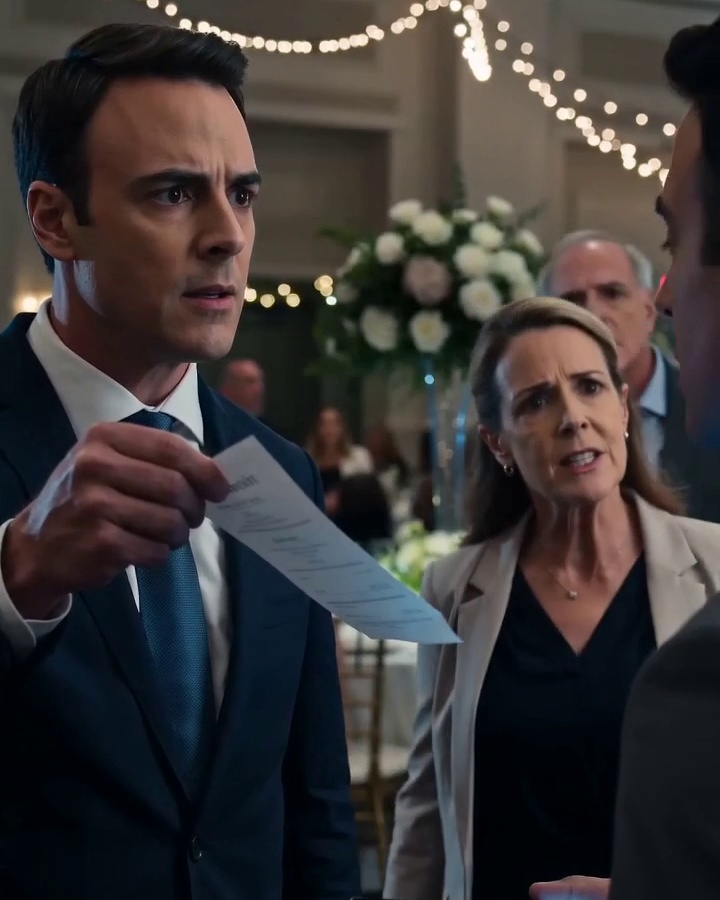
The night had begun with Daniel standing at the ballroom entrance.
Invitation in hand.
Table 8.
The attendant stopped him.
“Sir… your name isn’t on this table.”
Daniel laughed.
Held up the paperwork.
“It’s right here.”
The digital list showed another name.
David Hale.
The coordinator opened the change email.
Daniel’s seat had been deliberately reassigned four days earlier.
Then Robert and Helen saw the name.
“That can’t be right…”
And at that exact moment…
David walked through the doorway.
At first, everyone thought the mystery was about a seat.
It wasn’t.
The seat only forced people to ask why David Hale mattered.
That question led to Margaret.
Margaret led back to a café where she once waited three hours for a man who believed she had asked him not to come.
And finally…
to the father who had given two people opposite stories because he was afraid of losing his daughter.
Robert once told Daniel:
“I wish I’d trusted Margaret to make the decision herself.”
Daniel smiled.
“Probably cheaper than twenty-seven years of guilt.”
Robert laughed.
“Much.”
Then Daniel added:
“And next time you have a family reception…”
Robert looked at him.
“Yes?”
“Just add another chair.”
Robert smiled.
Because after everything that happened at Table 8…
that was the simplest lesson of all.
Not every conflict requires choosing which person belongs.
Sometimes there was room for the truth…
the past…
and everybody who had been wrongly removed from the story.
THE END
“`