Chapter 13 — The Signature Gideon Chose to Give
Eight years later, Tobin was eighteen.
He remembered less about the licensing deal than everyone assumed.
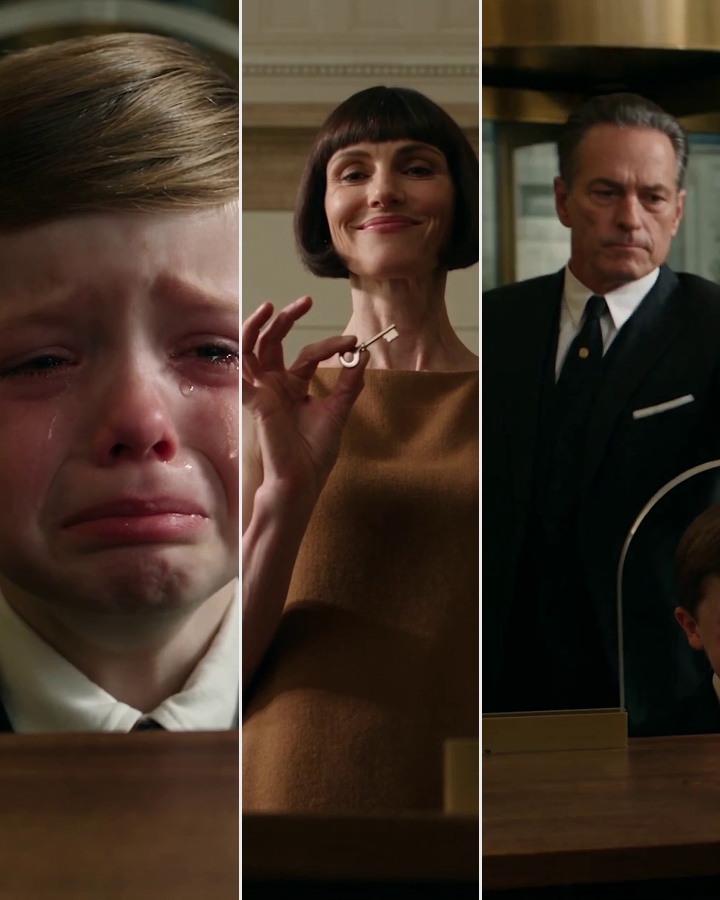
What he remembered most clearly was sitting behind the desk.
Adults standing around him.
Verity holding his father’s key.
Someone laughing when he said:
“Grandpa didn’t sign that.”
Then Gideon coming through the door.
For years, Gideon worried the experience would make Tobin suspicious of every institution.
It did not.
It made him unusually interested in how institutions proved things.
At sixteen, Tobin asked:
“Why did Dad give me the key instead of you?”
Gideon thought about it.
“Maybe because you were always with him near the end.”
“Maybe because he planned to explain it and ran out of time.”
Then:
“We shouldn’t invent certainty where we don’t have it.”
Tobin nodded.
That phrase had become a family rule.
Marcus’s archive was eventually organized properly.
Some of his technical work supported company patents and licensing.
Some notebooks remained private family property.
The wooden toy car was finished by Gideon and Tobin together.
It was terrible.
One wheel sat higher than the others.
Tobin kept it anyway.
Corinne remained part of the family.
Her relationship with Gideon never returned to what it had been.
That was a consequence.
Not revenge.
She eventually rebuilt a professional career elsewhere after the review process concluded.
Years later, she told Tobin:
“I’m sorry you were in that room.”
He looked at her.
“You already apologized to Grandpa.”
“I know.”
“But I never apologized properly to you.”
She continued.
“I treated your attachment to the key like childish emotion when you were actually repeating an instruction your father gave you.”
“Adults should have verified the issue without making you defend yourself.”
Tobin nodded.
He did not tell her everything was fine.
It was not necessary.
At eighteen, Tobin formally received several personal items from Marcus’s estate that had been held until adulthood.
One was a sealed letter.
Marcus had written:
TOBIN,
IF YOU ARE OLD ENOUGH TO READ THIS, THEN YOU ARE OLD ENOUGH TO KNOW THAT FAMILY BUSINESSES CAN MAKE PEOPLE CONFUSE LOVE, OWNERSHIP AND AUTHORITY.
Tobin smiled.
That sounded exactly like his father.
The letter continued:
IF SOMEONE TELLS YOU I WANTED SOMETHING, ASK HOW THEY KNOW.
IF SOMEONE TELLS YOU GRANDPA APPROVED SOMETHING, ASK TO SEE THE APPROVAL.
AND IF YOU DON’T KNOW, SAY YOU DON’T KNOW.
Tobin stopped reading.
Gideon looked away because his eyes had filled.
The final paragraph said:
YOU DO NOT HAVE TO RUN THE COMPANY.
YOU DO NOT HAVE TO PRESERVE MY PROJECTS.
YOU DO NOT HAVE TO BECOME ME.
JUST DON’T LET OTHER PEOPLE TURN MY NAME INTO PERMISSION I NEVER GAVE.
Tobin folded the letter carefully.
Then looked at Gideon.
“He basically predicted it.”
Gideon shook his head.
“No.”
“He knew the family business.”
“That’s different.”
Tobin laughed.
Months later, Gideon invited him to the company office.
The same building.
A different conference room.
On the table was one document.
Not an inheritance.
Not a transfer of control.
A simple consent form allowing digitization of Marcus’s personal notebooks for a restricted family archive while preserving original ownership terms.
Gideon read every page.
Then signed.
With a pen.
Tobin watched.
Gideon smiled.
“There.”
“Now if anyone says I signed it…”
Tobin finished:
“…you actually did.”
They both laughed.
Years earlier, the entire conflict had begun with one sentence whispered by a frightened child:
“She said you signed the paper…”
The problem was never only the image of Gideon’s signature.
It was what the signature represented.
Permission.
Authority.
A decision.
Someone had copied the appearance of all three without obtaining the reality of any of them.
That was why the plan collapsed.
Not because Gideon was rich.
Not because Tobin secretly owned the company.
Not because the cabinet held a hidden fortune.
The truth was simpler.
A pressured group of adults decided the correct result was obvious.
Then one person skipped the inconvenient step of receiving actual approval.
And a ten-year-old boy was the first person in the room stubborn enough to say:
“But Grandpa didn’t sign it.”
He was right.
Years later, Gideon told him that was not the lesson he most wanted Tobin to remember.
“What is?” Tobin asked.
Gideon replied:
“Being right doesn’t mean you should have had to fight the adults alone.”
That was why Gideon changed the system afterward.
A good institution could not depend on the least powerful person in the room being brave enough to stop everybody else.
It needed records.
Checks.
Clear authority.
And the humility to ask whether a signature was real before building an entire plan on top of it.
THE END
“`