Chapter 13 — The Folder Grandpa Finally Closed
Eight years later, Nora was eighteen.
The brown folder still belonged to Alden.
He kept it in a drawer beside Thomas’s photograph.
By then, Colonel Marcus Vale had retired.
The two families remained in occasional contact.
Not because they were obligated to become close.
Because history had connected them.
Nora once visited Marcus with Alden.
Marcus showed her Daniel’s old photograph collection.
One picture showed Daniel years after the war holding a baby.
Marcus pointed at it.
“That’s me.”
Nora stared.
Without Thomas’s decision decades earlier, Marcus might never have existed.
Neither would his children.
Neither would his grandchildren.
That realization was powerful.
But Marcus always corrected one thing when people became too dramatic.
“We cannot know every alternate future.”
“We only know my father survived that night and credited Thomas with helping make that possible.”
Evidence first.
Myth second.
Preferably never.
Alden changed the most.
For years, he blamed himself for believing the wrong story.
Eventually Nora asked:
“Did Uncle Thomas hate you?”
Alden looked toward the unsent letter.
“He was angry with me.”
“That isn’t the same thing.”
Then Nora asked:
“Do you think he would forgive you?”
Alden smiled sadly.
“I don’t get to invent his answer because it would comfort me.”
That was another lesson the family learned.
Dead relatives could not be made to forgive on demand.
They could not be rewritten into saints.
The living could only face the evidence that remained and behave better because of it.
Clarissa changed too.
She became careful with inherited family stories.
When someone said:
“Everybody knows…”
she started asking:
“How do we know?”
That question prevented several smaller myths from becoming permanent.
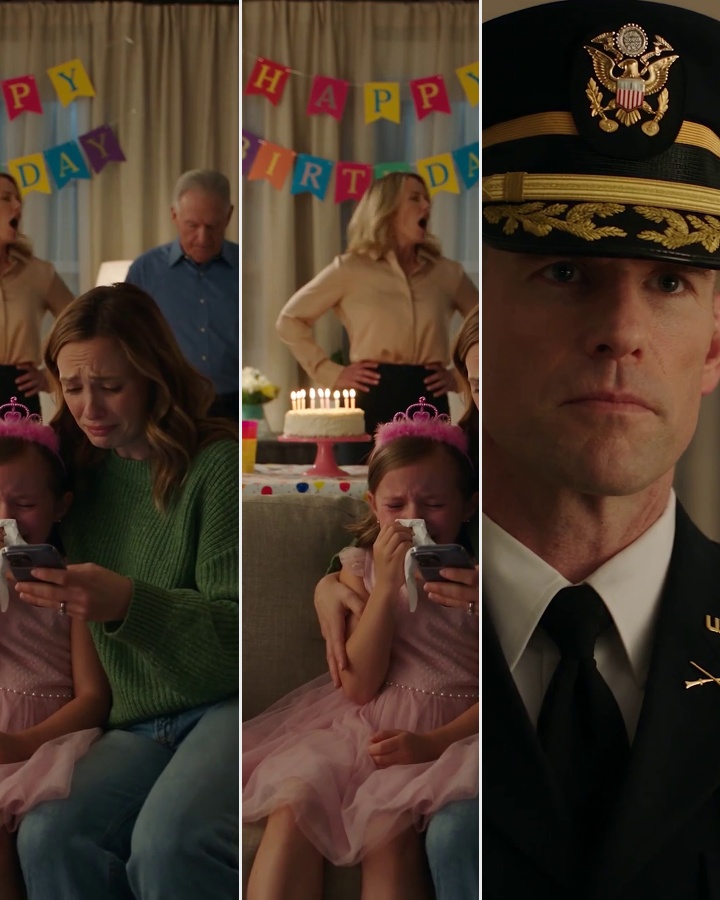
And Nora never forgot her tenth birthday.
She remembered crying beside her mother.
Clarissa saying:
“She’s too sensitive.”
Then the knock.
The uniform.
The sealed folder.
Grandpa Alden reading the first pages.
Colonel Marcus Vale removing his hat.
And the sentence that changed the family’s understanding of Thomas forever:
“My father was the man your brother went back for.”
The revelation did not make Thomas valuable.
He had always been valuable.
It did not create courage after the fact.
It simply corrected the story people had told about a frightened young man who made one difficult choice in sixteen chaotic minutes.
Years later, Nora asked Alden what he wished he had done differently.
He answered immediately.
“I wish I had believed uncertainty was uncertainty.”
She frowned.
He explained.
“I didn’t know what happened.”
“But instead of saying ‘I don’t know,’ I chose the worst explanation because it seemed to fit the incomplete facts.”
“Then I repeated it until it felt like memory.”
Alden looked toward Thomas’s photograph.
“That is how families can hurt people even without lying deliberately.”
Nora understood.
She later studied history at university.
Not because of Thomas alone.
But the folder influenced her.
She became fascinated by gaps.
Missing records.
Conflicting testimony.
The difference between what happened and what people later agreed had happened.
On Alden’s eighty-fifth birthday, Nora brought the brown folder downstairs.
He laughed.
“Not another dramatic birthday reveal.”
“No.”
She sat beside him.
“I just thought you might want this.”
Inside was a new archival copy of Thomas’s corrected supplemental record.
Nora had helped organize the family papers properly.
Alden read it once.
Then closed the folder.
For the first time, he did not reopen it.
He looked at Nora.
“Put it away.”
She smiled.
“You sure?”
Alden nodded.
“I know what happened now.”
Not every detail.
No one ever would.
But enough.
Enough to stop calling fear cowardice.
Enough to stop confusing an incomplete report with a complete truth.
Enough to restore Thomas to the family not as a flawless hero, but as a brother whose story had finally been told more fairly.
And enough for one little girl, years after an ordinary birthday dissolved into tears, to understand why facts mattered more than the story everybody had gotten used to repeating.
THE END
“`