Chapter 13 — The Phone Grandma Finally Put Down
Eight years later, Zariah was eleven.
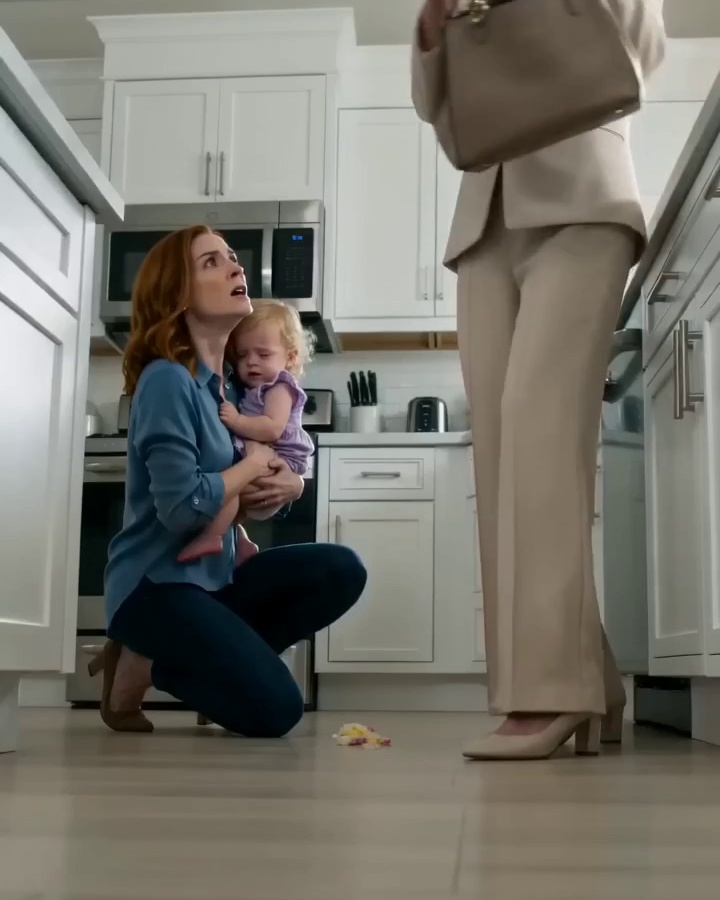
She remembered very little about the day the guardianship papers fell from Grandma’s handbag.
That was a blessing.
She remembered the smashed cupcake.
She remembered crying.
She vaguely remembered her mother picking her up.
She did not remember the legal argument.
Jenna was grateful for that.
Evelyn remained part of the family.
But rebuilding took years.
At first, visits were supervised.
Then longer.
Eventually normal family contact returned.
One boundary never changed.
Evelyn did not photograph or record Zariah during moments of distress without a clear, legitimate reason.
At birthday parties, school plays and holidays, Grandma still took far too many pictures.
Zariah complained constantly.
“Grandma, put the phone down.”
Evelyn usually obeyed.
Sometimes she even laughed.
“Fair request.”
The guardianship petition was never granted.
It was never even allowed to become the family mythology that:
Grandma almost stole Zariah.
That was too simple.
Evelyn had become genuinely concerned about Jenna and Marcus.
Some concerns were based on real stress in the home.
But concern hardened into certainty.
Certainty became surveillance.
Surveillance became selective documentation.
And eventually Evelyn started interpreting an ordinary toddler’s tears through one predetermined conclusion:
Zariah would be better off with me.
That was where she went wrong.
She stopped collecting information to understand what was happening.
She started collecting information to prove what she already believed.
The difference mattered.
Years later, Zariah found an old family video while scrolling through photographs with Jenna.
She was three in it.
Laughing in a kitchen chair.
Evelyn was behind the camera.
Zariah smiled.
“Grandma used to film everything.”
Jenna paused.
“She did.”
Zariah looked toward her.
“Why did you make that face?”
Jenna considered how much truth an eleven-year-old needed.
“There was a time Grandma and I disagreed badly about what was best for you.”
“Was Grandma wrong?”
Jenna answered carefully.
“About some things.”
“Your dad and I were wrong about some things too.”
“Did she try to take me?”
Jenna did not lie.
“She considered asking a court to let her become your guardian because she thought our home wasn’t stable enough.”
Zariah’s eyes widened.
“Did the judge say yes?”
“No judge ever gave her guardianship.”
“The plan stopped before it got that far.”
Zariah thought for a moment.
“Are you mad at her?”
Jenna smiled sadly.
“I was furious.”
“For a long time.”
“Now?”
Jenna looked across the yard where Evelyn was helping Marcus assemble a garden table incorrectly.
“Now I know she was scared.”
“Being scared didn’t make what she did okay.”
“But understanding why someone did something can help you decide what boundaries you need afterward.”
Zariah nodded.
Then returned to the photos.
That was enough truth for now.
The most dramatic version of the story always began the same way.
A toddler crying uncontrollably.
A grandmother standing nearby with her phone raised.
A mother rushing into the kitchen.
Then the handbag falling.
Papers scattering.
And two words appearing on the floor:
GUARDIANSHIP PETITION.
Jenna looking up.
“You’ve been planning this?”
Evelyn’s silence.
But the real lesson came afterward.
A guardianship petition was not a magic document that made a child belong to whoever filed first.
A crying video was not automatically proof of an unsafe parent.
A messy house was not neglect.
A late pickup was not abandonment.
A bruise was not evidence until someone understood how it happened.
And concern did not become objective simply because it was written in legal language.
Context mattered.
Patterns mattered.
Independent evidence mattered.
Most importantly, Zariah mattered as a child rather than as proof for either side.
On her twelfth birthday, Zariah sat in front of another cake.
Evelyn raised her phone.
Zariah pointed at her.
“One picture.”
Evelyn laughed.
“One?”
“Two if I like the first one.”
“Negotiator.”
Jenna smiled.
Evelyn took one photograph.
Then lowered the phone.
And joined everyone at the table.
For Jenna, that small movement meant more than any courtroom victory ever could.
Grandma was no longer standing outside the moment trying to turn it into evidence.
She was finally inside the family again.
THE END
“`