Chapter 10 — The Card Beside Henry’s Photograph
Six months after Henry’s memorial, Rebecca returned to the community baseball field.
A small dedication had been installed near the dugout.
Not a statue.
Henry would have hated that.
Just a wooden sign:
THE HENRY WALLACE PRACTICE FIELD
SHOW UP. ASK QUESTIONS. GIVE KIDS ANOTHER CHANCE.
Rebecca smiled.
“He would’ve complained his name was too big.”
Thomas laughed.
Noah stood nearby coaching a twelve-year-old boy through a batting drill.
“Again.”
The boy swung.
Missed.
“Again.”
Missed.
Noah smiled.
“Good. Now you’re getting all the bad swings out.”
Rebecca recognized the line.
Her father used to say exactly the same thing.
Grant occasionally volunteered too.
Not as director.
Not as someone in charge.
He repaired equipment.
Lined fields.
Did whatever needed doing.
Noah was polite to him.
Some days they talked.
Some days they didn’t.
Nobody pressured Noah to turn accountability into friendship.
That was another lesson Henry would have appreciated.
An apology can be owed.
Forgiveness cannot be demanded.
Rebecca kept the cream envelope from the memorial.
Months later, she found it inside a drawer.
She read Noah’s card again.
Ask Grant Mercer why Henry stopped going to Field 4.
Ask him what happened to the blue equipment bag.
Two questions.
That was all.
Yet those questions changed the story Rebecca thought she knew about her father’s final years.
She had believed Henry slowly withdrew from baseball after retirement.
He hadn’t.
He withdrew from one place because he refused to participate in an injustice.
Then quietly built another place where teenagers like Noah could keep playing.
The mystery began during the memorial.
A crowded hall.
A photograph surrounded by flowers.
Rebecca noticing an envelope that had not been there earlier.
Thomas opening it.
A handwritten card neither recognized.
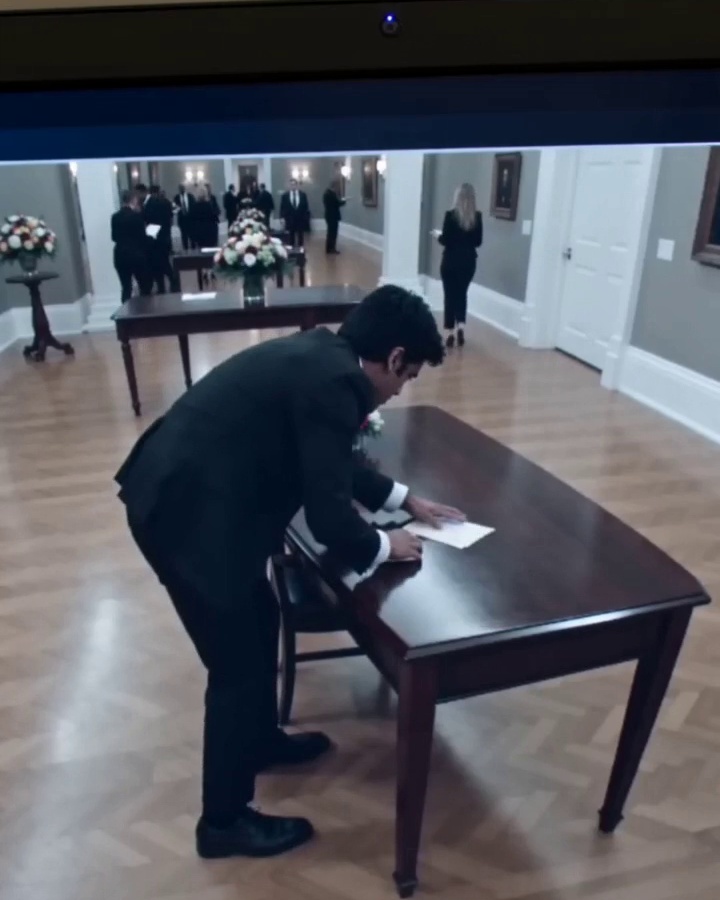
Then the security footage.
The hall almost empty.
A nervous young man approaching the table.
Bending down.
Leaving the envelope.
Thomas pausing the recording.
“That’s it.”
Then the young man himself appearing behind them.
And suddenly pointing toward the entrance.
“That’s him!”
Grant Mercer had just walked into Henry’s memorial.
For a moment, everyone assumed the envelope contained some enormous hidden crime.
The truth was quieter.
And in some ways worse.
A seventeen-year-old boy had been accused because he was convenient.
The adult who knew better stayed silent because correcting the story would embarrass him.
Henry refused to participate.
That choice cost him a place he loved.
But it gave Noah something he desperately needed.
One adult who believed a teenager’s entire character should not be decided by how suspicious he looked.
Rebecca eventually asked Noah:
“Did Dad really believe you immediately?”
Noah shook his head.
“No.”
She looked surprised.
“He checked.”
That answer made her smile.
Henry had not believed Noah because he was sentimental.
He believed him after the evidence supported him.
And when the evidence pointed away from Noah…
Henry changed the story instead of forcing the evidence to fit the accusation.
Noah remembered exactly what Henry told him after the truth came out.
“You don’t owe anybody perfection just because they once suspected you.”
Then:
“You only owe yourself the chance to become better than the story they told.”
Noah did.
He finished school.
Went to community college.
Then returned to coach younger players on the same field where Henry had helped him.
One afternoon, Noah placed an old blue equipment bag on the bench.
A twelve-year-old boy pointed toward the writing on its side.
NO ASSUMPTIONS. ASK FIRST.
“What does that mean?”
Noah smiled.
“It means if something goes wrong, we figure out what happened before deciding who did it.”
The boy shrugged.
“Seems obvious.”
Noah laughed.
“You’d be surprised.”
Across the field, Rebecca stood beside Thomas.
She watched another generation of children practicing.
Then looked toward Henry’s sign.
Her father’s memorial had been intended to mark the end of his story.
Instead, one mysterious envelope revealed how much of that story his own family had never known.
And somewhere between the security recording, the blue bag, the old accusation, and a frightened young man finally telling the truth…
Rebecca understood something.
A memorial is not only about remembering the person who died.
Sometimes it is also the last chance to correct the things they refused to let everyone else forget.
THE END
“`