Chapter 10 — The Pink Line Stayed
Helen’s birthday gift was eventually completed.
Nina restored all three family photographs.
Instead of enlarging only the formal portrait, Robert changed the plan.
He created a frame containing all three images.
The posed photograph.
The laughing photograph.
And the one where little Rachel turned toward Evelyn.
Helen cried when she saw it.
“This is better than the original idea.”
Robert smiled.
“Significantly more expensive too.”
Helen laughed.
The digital restoration removed every trace of the pink line.
But Robert did something unexpected with the damaged original.
He did not throw it away.
He placed it inside an archival sleeve.
The pink mark remained visible.
Rachel asked:
“Why keep that one?”
Robert looked toward it.
“Because that’s what actually happened.”
The photograph was no longer perfect.
But hiding it would have felt strangely similar to what he tried doing the day he damaged it.
Erase the mistake.
Replace the story.
Pretend the uncomfortable part belonged to somebody else.
Robert wanted the opposite now.
So the original stayed.
Not displayed prominently.
Not as some family monument to guilt.
Just preserved.
Along with the restored copies.
One afternoon, Ava looked through the family-photo box.
She found it.
“Grandpa.”
Robert looked over.
“Yes?”
She held up the photograph.
“Pink line.”
“I see it.”
“Why didn’t Nina fix this one?”
Robert sat beside her.
“She fixed the picture on the computer.”
“But this is the actual paper.”
“Oh.”
Ava stared at it.
Then pointed toward the family members.
“That’s Mommy?”
“Yes.”
“Grandma Helen?”
“Yes.”
“Who’s that?”
“Great-Grandma Evelyn.”
Ava studied the faces.
The pink line crossed part of the porch and one edge of Michael’s shirt.
It looked ugly.
But the people were still visible.
Ava asked:
“Did you ruin it forever?”
Robert thought carefully.
“I damaged it.”
Then:
“That’s not always the same as ruining something forever.”
Ava nodded.
“Because we have the other pictures.”
“Partly.”
“And Nina fixed it.”
“Partly.”
Then Robert added:
“And because sometimes something can still matter even after it gets damaged.”
Ava seemed satisfied.
Robert realized the same thing applied to trust.
He had damaged Ava’s trust that afternoon.
The camera corrected the facts immediately.
But a video could not automatically repair how she felt.
That required something slower.
Telling the truth afterward.
Apologizing without excuses.
Changing his behavior.
And accepting that Ava might remember.
The afternoon itself had started so simply.
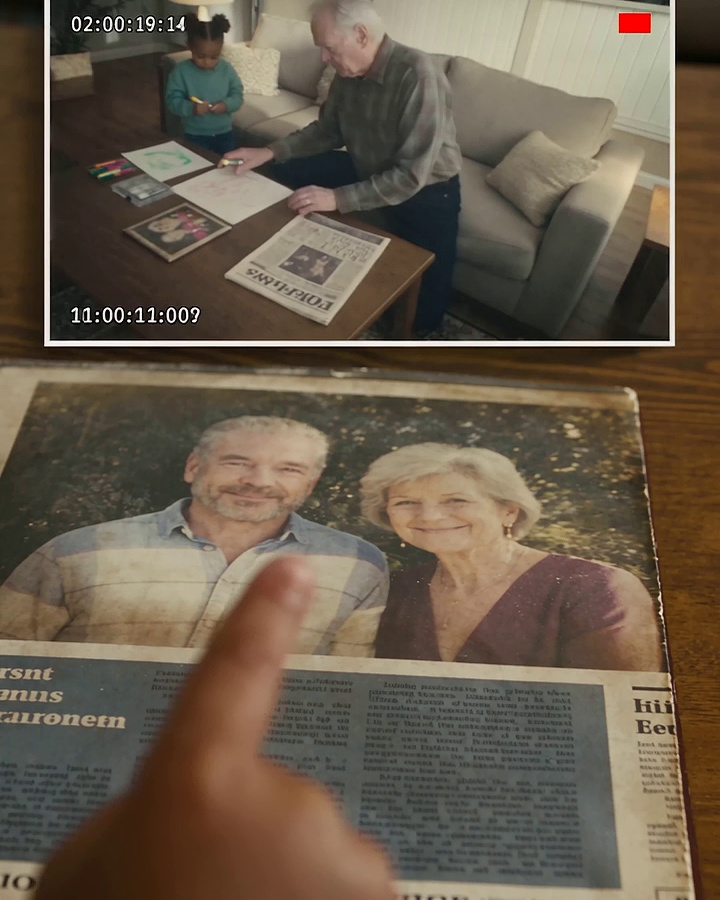
A little girl coloring at the dining table.
An old photograph nearby.
Robert preparing a surprise gift.
Two nearly identical prints.
One pink marker.
Robert picked up the wrong photograph.
His hand moved across it.
Pink ink appeared.
He froze.
Then Ava returned.
She had been coloring.
She had markers.
And Robert saw an easy escape.
Minutes later, he stood beside the photograph holding the marker box.
“Explain why you did this.”
Ava cried.
“I didn’t.”
Robert insisted she had been sitting there.
Rachel asked the question he did not want asked:
“Did you actually see her make that mark?”
Then Ava pointed toward the camera.
The recording showed the whole sequence.
Ava coloring.
Ava leaving.
Robert entering.
Robert lifting the marker.
Robert drawing across the photograph.
Then Ava returning only afterward.
Rachel paused the video.
“She never touched the photograph.”
The camera did not merely expose who drew the line.
It exposed the moment Robert decided embarrassment mattered more than fairness.
That was harder to look at.
Years later, Ava was old enough to remember the story differently.
She once asked Robert:
“Were you scared when Mom checked the camera?”
Robert laughed.
“Terrified.”
“Because you knew it was you?”
“Yes.”
Ava smiled.
“You should have told the truth first.”
Robert nodded.
“Absolutely.”
Then she asked:
“Did you really think everyone would believe you instead of me?”
Robert looked at her.
That question still embarrassed him.
“For a moment, yes.”
Ava frowned.
“Why?”
Robert answered:
“Because I was the adult.”
Then:
“And that’s exactly why I should have been more careful.”
Ava nodded.
That became the lesson Robert remembered most.
Being older did not make his version automatically more truthful.
Being trusted did not make him entitled to use that trust as protection.
And being embarrassed did not give him permission to hand his mistake to a child.
At Helen’s house, the restored three-photo frame remained on the wall.
Visitors usually noticed the laughing photograph first.
Evelyn’s smile.
Young Rachel turning away from the camera.
The family caught between poses.
But inside Rachel’s photo box…
the original still carried one thick pink line.
Robert never asked anyone to erase it completely.
Because eventually the mark stopped representing only a ruined photograph.
It became proof of something else.
A mistake can happen in one second.
A lie can happen in the next.
And sometimes the most important part is what you choose to do after both.
Robert had chosen badly once.
Then the camera remembered what actually happened.
After that…
he made sure he did too.
THE END
“`